


From a bestselling, award-winning author comes a compellingly realised story of an enigmatic figure, the beautiful 19th century muse and brilliant social powerhouse, Florence Stoker, whose life, in spite of her many gifts, was overshadowed by one of the most abiding and terrifying of contemporary culture's monsters, the vampire Dracula - her own husband's creation.
Dublin, 1878. When the witty and beautiful Florence Balcombe marries up-and-coming theatre impresario and putative novelist Bram Stoker, and her dazzling literary salons make her the darling of the literary, theatre and art worlds in London, no-one is surprised. So what if she came from humble beginnings and her prior engagement to Oscar Wilde was inexplicably broken off, she was always exceptional. Besides, none of that matters now she moves in exalted circles and Bram is managing the Lyceum for Henry Irving, the leading actor of his generation.
But appearances can be deceptive. Bram is in thrall to the tyrannical narcissist Henry, who is draining the life from him, and his distance from his marriage bed is noticeable. Dear friend Oscar is in court for gross indecency and Florence is afraid - for her family, of the secret she keeps and of the visions of a monstrous fanged demon that haunts her by day and night.
But Florence will fight for her family and rid herself of the threats - both real and phantom - that plague her, even if it threatens her own sanity.
After all, no ordinary monster can confound the extraordinary Florence Stoker.
Florence [Stoker] had effectively captured the imaginations of the creators of Svengali, Dracula and Dorian Gray … Rarely, if ever, has a woman been the focus of so much literary demonism …
David J Skal, Hollywood Gothic
PROLOGUE
London, 1927
They call me Mrs Dracula now. Once more I’m relegated to being ‘the Wife’, this time, to my husband’s fictional creation. As I look back over the years, it’s fair to say I’ve endured my share of monsters and unquiet spirits, all while striving to keep them at bay.
Ever since I married Bram on that chill December morn in Dublin, everything I’ve done has been in service to my marriage, to support my husband, his thankless labours for another, his dogged efforts to make a name for himself through his writing.
Surely, the choices I made, what I sacrificed, the secrets I kept, must be worth something too? If not, then what was it all for?
This is why I must ensure Bram’s legacy: to prove that as his wife, his widow, my life also had meaning. It’s all I want now.
That, and to forgive him.
And, perhaps, in doing so, forgive myself.
PART ONE: 1876 to 1878
Build our castles in the air
Some day women must learn their own strength, as well as they have learned their own weakness. They are taught this latter from their cradles up; but no one ever seems to teach them wherein their power lies.
Bram Stoker, The Man
Dublin, Christmas Day 1876
Flurries of snow danced and twirled outside the bedroom window, turning the entire streetscape and the park opposite into a magical stage where tiny white ballerinas pirouetted. In the distance, church bells tolled merrily and the faint shouts of locals extending festive greetings rang out. Under normal circumstances, I’d have been beside my youngest sister Alice atop the window seat, face pressed against the glass, marvelling at the glistening vista, admiring the twinkling Christmas trees and candles in nearby windows, and pointing out which of our neighbours was abroad this lovely morn. Instead, I was staring critically at my reflection as my eldest sister, Phillippa, fussed and brushed, trying to style my unruly hair. It was important I looked perfect: it was Christmas Day and Oscar had sought my parents’ permission to escort me to the morning service at St Patrick’s cathedral. I was only eighteen and propriety must be observed, after all.
Much to my surprise, Mother agreed. Father (bless him) would have had little say in the matter. Absent for much of my life, having been mostly stationed in Bombay while I was growing up, my older sisters and I used to refer to him as ‘the unicorn’, so rare were sightings. Mother had virtually raised we seven surviving Balcombes single-handedly. Well, with help from our long-suffering cook, Mrs Gallagher, and the various maids who flitted in and out of our lives and left us broken-hearted when they moved on. Sometimes I’d see an expression on Father’s face as he regarded us that was a mixture of wonder and horror, as if he couldn’t quite work out how we all came to be here. When Mother saw it, she’d drop a kiss on his balding pate, pat his shoulder soothingly, and pass him his pipe.
Ordinarily, Mother (and indeed Father) wouldn’t have entertained the notion I desert the family Christmas morn – that was sacrosanct – let alone with a young man. But Oscar had become an exception to many established rules since he’d entered our lives. Able to charm with a smile, draw conversation from my usually taciturn father and coax a laugh from Mother, he enchanted all who came into his orbit. A smitten Kitten, Phil called me, deploying her nickname for me in a not unkind way. Of all my siblings, only Phil remained reserved about Oscar. I understood why. Older than me, her heart had been broken many times; so much so, she’d sworn off men. Not wanting me to know the agony of unrequited love, she declared herself the guardian of my affections. Hence, she had bullied my brothers James and Billy into acting as chaperones for this outing. The boys objected, in the way that only brothers can – loudly and long, trying to make the arrangement transactional.
‘We won’t open the presents until after luncheon,’ assured Mother, appeasing them somewhat. ‘And,’ she added, ‘if you go with Florrie and Oscar, then you’re exempt from attending the midnight service on Christmas Eve.’
The boys let out a whoop of joy (Father Bowan’s sermons were famous for being tedious), earning a severe frown from Father. ‘Not you, Florence,’ said Mother quickly. ‘You’ll be coming with us, so wipe that smile off your face.’
I couldn’t erase it now. Phil had done a marvellous job of arranging my thick chestnut curls. A few more pins, and the ridiculous little hat that matched the powder blue gown I’d finally selected would be secure. On the bed behind me lay all the other frocks I’d rejected – two of Phil’s hand-me-downs, her best, and one of Maude’s. All had been patched and mended so many times, it was a miracle the seams didn’t unravel. Phil said she’d tidy them away after I left. I really had made a mess of our usually orderly bedroom. It was one of the reasons I was so glad I shared with Phil and not Maude, Catherine or Alice – they were terribly disorganised, to put it mildly. I watched Phil concentrating, a pin clenched between her lips, her deft hands selecting a jaunty angle for my headwear.
‘He’s here!’ squealed Alice, making both me and Phil jump. To my dismay, Alice swept the curtain aside and, uncaring she’d be seen, struck the glass and waved frantically at the street below. ‘Oscar!’ she shouted. ‘Oscar!’
‘Alice!’ I exclaimed, trying to sit still, even as my chest filled with butterflies. Butterflies, bees, and a murmuration of starlings. ‘Move away from the window, now.’
‘Too late. He’s seen her,’ said Maude, who’d been quietly reading on the other window seat. She beckoned me over.
Cautiously, I approached the window, certain I couldn’t be seen behind the lace curtain. There on the street below, just alighting from a glossy carriage, was Oscar, who raised his hat and smiled in my direction. My heart did that thing it always did whenever I saw him; took off like a falcon in flight, making it difficult to breathe, let alone think. Tall, handsome in a louche sort of way, with deep-set eyes, skin like alabaster and a mobile mouth with lips just made for kissing (so Maude said), I could hardly believe my good fortune that this man had set his sights on me. As the third of Lieutenant Colonel James Balcombe’s daughters, I might have been educated, admired for my looks, and full of dreams and ambitions (Father blamed the novels and poetry I read voraciously) that had me chafing at the restraints life imposed, but I was also, like the rest of the family, penniless. Marriage to a man with wealth and prospects was my best, indeed only, hope of changing my destiny. I was pragmatic enough to understand that unlike Mr Oscar Wilde, I was no catch. Yet, here he was, behaving in the manner of a suitor … with me.
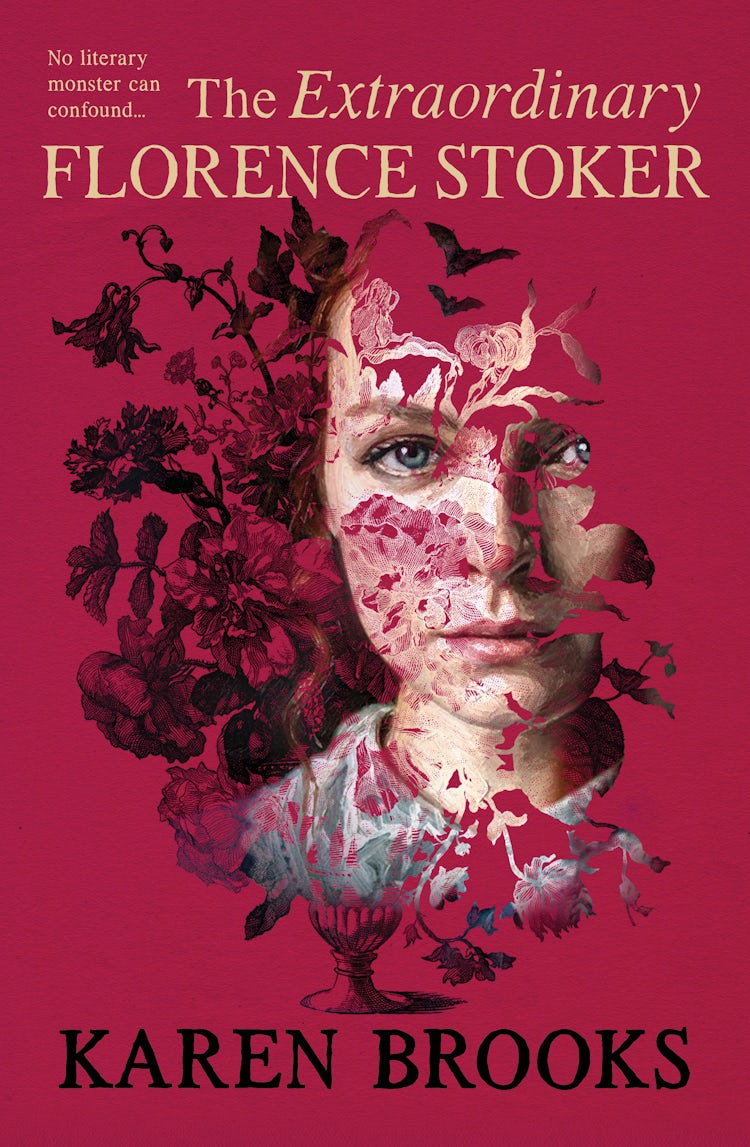
Publication Date: 1st September 2026
1 Comment
A book for all Dracula fans and those who know nothing about him.