


Karen Brooks, author of The Extraordinary Florence Stoker, dropped by the blog to tell us about all the research that didn't make it into her latest book.
When writing a book, there’s always material which, for a whole range of reasons, never makes it to the published edition. Sometimes, it’s because the material doesn’t serve the story, or because it pulls the reader away and slows the pace down. In the case of historical fiction, sections or words and paragraphs might be cut because the author has forgotten they’re writing a novel and has become caught up in proving how hard they researched!
Despite having written seventeen books, with The Extraordinary Florence Stoker (TEFS), I was guilty of all the above. Thank the writing fairies for editors who slash, burn, trim, and tidy what’s sometimes unruly and unnecessary verbiage.
I’m never adverse to “killing my darlings” (cutting words and parts out). Often my delete file (of chapters I remove, paras etc), contains more words than the finished book. But I don’t completely obliterate them. I’ve named the file, “Witness Protection” because sometimes, these words are returned to the world of the story J.
Basically, because Florence and Bram led such interesting lives, especially in terms of the literary, political, scientific, artistic and other people they mixed with, I had to be very selective about who I included as fully-rounded characters. If I hadn’t, the book would have been enormous and akin to a roll-call of famous names. So, for example, they were friends with Gabriel Dante Rossetti, a neighbour, but because he died in 1882, I mention him in passing. Lord Alfred Tennyson, the Poet Laurete, gets a brief mention, even though he was good friends with the Stokers. Likewise, a range of American Presidents, (the exception being Chester Arthur, with whom Bram dined at the White House), despite Bram meeting them, didn’t serve the story, so were left out. The same with many other explorers, scientists and artists and playwrights the Stokers knew.
I also had to edit out mention of the many trips Florence (and sometimes Bram) made back to Dublin. Also, to Paris, and brief trips to parts of Europe.
But the biggest cut made in the book, apart from a couple more letters Florence wrote home to her sister, Phil (they created too much repetition), was a chapter that covered the only time Florence accompanied Bram to Canada and America on a Lyceum tour. It was the third Lyceum tour. The chapter gives Florence’s impressions of the countries and how the Lyceum Company, and especially Bram, were received and treated (like royalty).
I’m releasing these paragraphs from Witness Protection for you to read:
As the days rolled into weeks then months, and more people came into our orbit, I found my assumptions about Americans both challenged and often overturned. Back in London, based mainly on introductions at the theatre, Beefsteak Room dinners, or a soiree, it was easy to assume all Americans were loud, brash and bold, ready with an opinion and observation (whether solicited or not), and the women beautiful, independent and ready to express a conviction (whether solicited or not). Here, in their homeland, it was far more complicated and nuanced.
Both the Canadians and Americans I met were charming and forthright in a way the British weren’t (and yet with a tact the Irish lack). Of course, there’s always one or two individuals who prove trying, and a poor representative of their countrymen, and indeed, sex, isn’t there? I’d met poets, playwrights, actors and actresses, too many politicians with booming voices and outrageous propositions to countenance. I’d met journalists and critics (often one and the same).
Yet, even with all the geographical beauty, outgoing and generally affable people, the sense of promise that hovers in the very air, the accolades and admiration showered upon us, I missed home. I missed Irving too. Accustomed to the weight of history, America was too novel, too brash; a stage set. England is like a favourite dress, donned regularly, faded and comfortable. America is like a new gown, the stitching stiff, the colours bright, the seams all perfect, and styled in the latest fashion. But it was also prickly and awkward to don and would lose its lustre quickly. The longer I spent in America, the more I thought of it as being like a pair of fine shoes yet to be worn into shape. Even all the approbation received became tedious and rang with a shallowness that made me squirm after a while. I’d rather folk praised wit over beauty, achievement over wealth or fame, but Americans rarely spent enough time on anything to take a deeper view. They’d utter a few platitudes, then sweep on to the next (more attractive, richer, better-connected) person.
Sadly, as much as I researched and loved writing this chapter (this is a small section), my editors were right. It didn’t move the story on. On the contrary, like the train the company rides across North America, and which is derailed due to snowstorms, it sent the tale off-track.
So much is left out novels – historical fiction, I think, especially. But none of the writing or work is wasted. Even what doesn’t appear aids the final product because what’s on the page is immediate, relevant and hopefully, thrilling to read.
Deleting isn’t a bad thing when it comes to novels. Sometimes, that button on the keyboard is a writer’s (and reader’s) best friend.
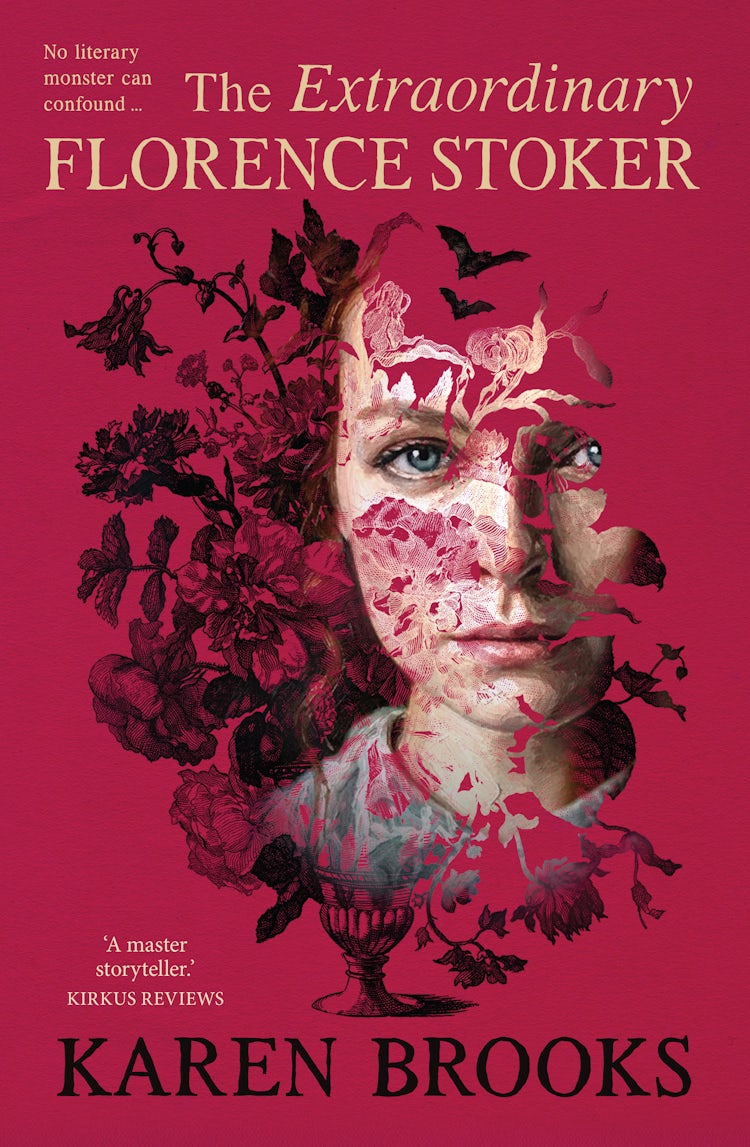
From a bestselling, award-winning author comes a compellingly realised story of an enigmatic figure, the beautiful 19th century muse and brilliant social powerhouse, Florence Stoker, whose life, in spite of her many gifts, was overshadowed by one of the most abiding and terrifying of contemporary culture's monsters, the vampire Dracula - her own husband's creation.
Dublin, 1878. When the witty and beautiful Florence Balcombe marries up-and-coming theatre impresario and putative novelist Bram Stoker, and her dazzling literary salons make her the darling of the literary, theatre and art worlds in London, no-one is surprised. So what if she came from humble beginnings and her prior engagement to Oscar Wilde was inexplicably broken off, she was always exceptional. Besides, none of that matters now she moves in exalted circles and Bram is managing the Lyceum for Henry Irving, the leading actor of his generation.
But appearances can be deceptive. Bram is in thrall to the tyrannical narcissist Henry, who is draining the life from him, and his distance from his marriage bed is noticeable. Dear friend Oscar is in court for gross indecency and Florence is afraid - for her family, of the secret she keeps and of the visions of a monstrous fanged demon that haunts her by day and night.
But Florence will fight for her family and rid herself of the threats - both real and phantom - that plague her, even if it threatens her own sanity.
After all, no ordinary monster can confound the extraordinary Florence Stoker.